
Understanding the Great Commission
“And Jesus came and said to [the disciples], ‘All authority in heaven and on earth has been given to me. Go therefore and make disciples of all nations, baptizing them in the name of the Father and of the Son and of the Holy Spirit, teaching them all that I have commanded you. And behold, I am with you always, to the end of the age.’” -Matthew 28:18-20
What we have on our hands here is called “The Great Commission.” This string of verses is one of the most important in the whole Bible. Understanding this passage should affect every aspect of your life. So what does it mean? Let’s go over it phrase by phrase.
“And Jesus came and said to them”
Jesus arrived at the mountain in Galilee he directed his disciples to be at, which was mentioned in a previous verse. He is about to speak:
“All authority in heaven and on earth has been given to me.”
Jesus is claiming his deity – he is God. He is allowed to say whatever he wants with the same authority as the Father in heaven or any king on earth. Jesus has claimed this multiple times already, but he’s claiming it again.
“Go therefore and make disciples of all nations,”
Therefore, because he has all this authority, he commands us to make disciples of all nations. What does it mean, though, to “make disciples” of “all nations?” Let’s dive even deeper into the text.
“make disciples”
What is a disciple? Before we make disciples, we need to know the ingredients. In this case, the first ingredient is quite literally “love.” Jesus says in John 13:34-35,
“A new commandment I give to you, that you love one another: just as I have loved you, you are also to love one another. By this all people will know that you are my disciples, if you have love for one another.”
Jesus’s disciples were to be identified by the love that they had for one another, which was the same kind of love that Jesus first showed them. Another defining verse is found in John 8:31-32:
“So Jesus came to the Jews who had believed him, ‘If you abide in my word, you are truly my disciples, and you will know the truth, and the truth will set you free.’”
As Jesus defines here, his disciples are identified by their abiding in his word and are set free consequently. In the following verses he clarifies that to be set free, one cannot live under sin.
So basically, a disciple is one who follows the teachings of the Bible (“my word”), following the path of truth and love that God lays out, unwilling to take any detours. To simplify even further, we can deduce that “make disciples” means to “make people act like Jesus.” Of whom are we to make disciples of, though?
“of all nations”
Of all nations? Are there not already Christians in all 206 countries, as recognized by Wikipedia? Where’s Jesus at, then, if everyone’s already a Christian?
This word, “nation,” can be misleading. While it certainly can be defined as a border on a map, what it’s most likely to mean is, as defined by ethne, the original word in Greek, is “a group of people associated with living together.” “Ethne” sounds a lot like “ethnicity,” and they are very similar to each other.
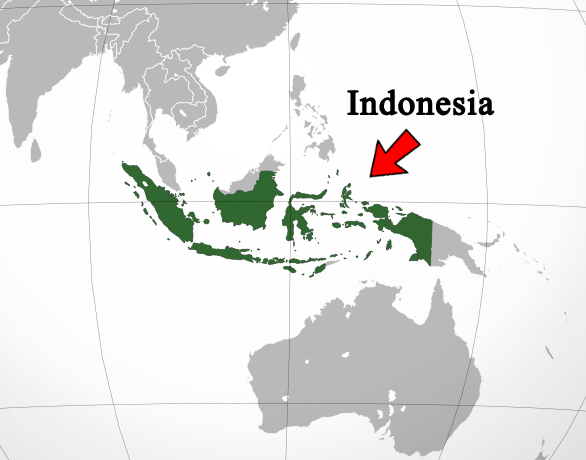
Think about the nation of Indonesia. This archipelago has 2,000 populated islands, some of which are quite culturally remote. If one group of people from the capital city is discipled, that still leaves out the huge amount of people on other islands undiscipled, let alone within the city itself. Even though there might be a Christian in the country, it doesn’t mean that every group of people on every island is Christian. Suffice to say, there are more “nations” than a lot of us think exist, but we are still tasked to disciple each and every one of them. Think of the different groups of people even within your own greater community. Can you disciple any of them?
“baptizing them in the name of the Father and of the Son and of the Holy Spirit”
Jesus further describes what it means to make a disciple. If the first ingredient in making a disciple is love, then the second ingredient is water (baptism). Baptism is the ritual of immersing someone in water, but baptism isn’t done just for the sake of it. Everywhere that baptism is mentioned, salvation is also. When one is baptized, they do it to proclaim their allegiance to God. So not only do disciples love one another like Jesus, but they must all wholeheartedly believe in Jesus – in his teachings, miracles, and deity. When one is baptized, they are committing themselves to a new life of truth and love that only God can provide.
“teaching them all that I have commanded you.”
This is the last part of Jesus’s commands. So far, we have been shown that disciples are made with love and water – now we see that they are also made up of the recipe book itself! If I were to list everything that Jesus commanded, I would be reciting the entirety of the Bible, which you can read for yourself. If we listen to everything that Jesus commanded, we should be people of outstanding character, and able to pass down that same character to others, which we inherited from Jesus first.
Disciples are composed of faith, love, and knowledge. We are commanded to be more than only “religious” or only “loving” or only “smart.” If we are not all three, we leave ourselves incomplete. If we try to obey the great commission but leave out discipling, baptizing, or teaching, we are not obeying it.
I’ve been using a lot of talk about “us,” as if Jesus gave this commandment to everybody who reads it and not just Jesus’s disciples from the year 30 A.D., even though the first verse explicitly says that it was directed to them. If we read the final words of this passage – and the final words of the book of Matthew – it will be made clearer:
“And behold, I am with you always, to the end of the age.”
As I have stated in a previous post, the immediate end of the world is not upon us yet. And contrary to what some people believe, none of Jesus’s eleven disciples inhabit the earth anymore. Yet, Jesus is with his disciples until the end of the age (earth). How is this so? Remember what it means to be a disciple. To be a disciple is to act as Christ would. Therefore, If Jesus made disciples, and he tells his disciples to make disciples, then it should go without saying that those disciples should disciple disciples of their own, reproducing Christians until the end of the age. This last sentence should give us great encouragement. This is a guarantee that one day, every group of people will know of Christ!
Because we know that this Commission of Jesus’s will be fulfilled, we should have no hesitation in taking part of it. Furthermore, it is imperative that we obey it, for it has been entrusted to us. The Great Commission will be seen through with or without your help. However, to obey the command of our Lord, it should be an obvious decision that we make disciples of all nations. We might not be traveling through the wooded jungles to reach people, but there are still concrete jungles to be reached. However, evangelizing is not for everyone. But even if we aren’t directly introducing lost souls to salvation, we can support those who do, whether by teaching them as children, mentoring them as adults, praying for them, or being part of an organization that sends them out.
The harvest is plentiful, but the laborers are few. Are you willing to labor for the Lord’s Great Commission?